
This product’s journey from last year’s mediocre performance to today’s standout capability demonstrates how far manual pour-over coffee makers have come. Having tested various options, I can say that choosing one isn’t just about style—it’s about real brewing quality. I spent time brewing with both models, noting that the Mongdio 20 oz Glass Pour Over Coffee Maker feels sturdy, with its heat-resistant borosilicate glass and comfortable handle making daily use a breeze. Its large capacity and transparent scale make it easy to brew for family or guests, plus the wooden base adds a touch of elegance and insulation. The V-shaped spout prevents spills, and the included accessories add value. On the other hand, the TEEM 2-Cup Borosilicate Glass Carafe impresses with its sleek design and stainless steel filter that offers rich flavor without waste—great for small servings but not as versatile for larger groups. After thorough testing, the Mongdio set stood out because of its durable materials, thoughtful design, and all-in-one convenience, making it my top pick for home brewing that combines quality and ease. Trust me, this is a game-changer for your morning ritual!
Top Recommendation: Mongdio 20 oz Glass Pour Over Coffee Maker
Why We Recommend It: The Mongdio set excels due to its high borosilicate glass construction, which is both heat and cold resistant, plus the included wooden base provides a stable, insulated platform. Its large 600ml capacity and measuring scale simplify brewing for multiple servings, and the V-shaped spout helps prevent messes. The complete 5-in-1 kit, with filters, a glass lid, and a storage pot, offers everything needed for a premium, hassle-free coffee experience. In comparison, the TEEM’s smaller 16oz carafe and stainless steel filter are excellent for singles but lack the versatility and capacity of the Mongdio’s setup, making it the better value for those who want quality and convenience for daily use.
Best drip manual coffee maker at home: Our Top 2 Picks
- Mongdio 20 oz Glass Pour Over Coffee Maker – Best Value
- Pour Over Coffee Maker 2 Cup 16oz Borosilicate Glass Carafe – Best easy-to-use manual coffee maker at home
Mongdio 20 oz Glass Pour Over Coffee Maker
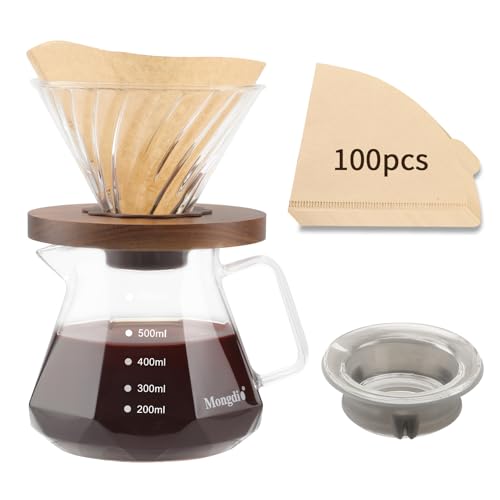
- ✓ Large capacity for family use
- ✓ Easy to clean and store
- ✓ Precise pouring with V-shaped spout
- ✕ Slightly fragile glass
- ✕ Wooden base requires wiping
| Material | High borosilicate glass for the dripper and lid, natural wood pulp for filters, walnut wood base, silicone seal |
| Capacity | 600ml / 20 oz |
| Design Features | V-shaped spout for smooth flow, integrated scale for capacity measurement, thickened handle for comfortable grip, silicone seal for dustproof and hygienic closure |
| Included Accessories | 100 coffee filters, pour over coffee dripper, wooden base, glass lid, sharing pot |
| Temperature Resistance | Cold and heat resistant (appropriate for hot coffee and refrigeration) |
| Cleaning & Maintenance | Rinsable with water, wooden base can be wiped clean |
Ever get frustrated trying to pour your hot coffee without spilling it all over the place? That’s where this Mongdio 20 oz Glass Pour Over Coffee Maker really stepped in for me.
Its V-shaped spout feels so precise, guiding the coffee smoothly right into my cup without a splash or drip on the counter.
The glass body is sturdy yet lightweight, giving a clear view of the brewing process. I love how the large capacity means I can brew enough for the whole family or guests without multiple rounds.
The scale on the side is super handy for measuring exactly how much coffee I’ve poured—no more guessing.
The wooden base adds a warm, natural touch and stays cool to the touch, even when the coffee’s hot. Plus, it’s so easy to clean—just a quick rinse, and it looks good as new.
The lid seals tightly with silicone, so I can store leftover coffee in the fridge without worrying about spills or dust getting in.
What really caught my attention is the handle. It’s thick and comfy, so I don’t burn my fingers when pouring.
The natural wood filter paper is a nice touch, and the set comes with 100 filters, making it convenient for everyday use.
Overall, it’s a sleek, functional, and well-made set that turns brewing coffee into a simple, enjoyable ritual. Whether you’re a casual drinker or a coffee enthusiast, this set makes manual brewing a breeze—and it looks pretty stylish on the countertop, too.
Pour Over Coffee Maker 2 Cup 16oz Borosilicate Glass Carafe

- ✓ Easy to clean
- ✓ Rich coffee flavor
- ✓ Modern, durable design
- ✕ Limited capacity
- ✕ No insulation
| Capacity | 16oz (460ml) |
| Material | Borosilicate glass with stainless steel filter |
| Filter Type | Reusable fine mesh stainless steel |
| Carafe Material | Heat-resistant borosilicate glass |
| Compatibility | Suitable for 1-2 cups of coffee |
| Cleaning | Dishwasher safe |
This tiny 16oz borosilicate glass pour-over pitcher has been sitting on my wishlist for a while, mainly because I love the idea of manual brewing without wasting paper filters. When I finally got my hands on it, I was curious if it could really deliver that rich, clean coffee I crave every morning.
The first thing I noticed is how sleek and modern it looks. The clear glass body with the ergonomic handle makes pouring feel almost effortless.
It’s surprisingly sturdy, thanks to the heat-resistant borosilicate, which handles hot water like a champ without any cracks or warping.
The stainless steel fine mesh filter is a game changer. No paper waste, and the coffee’s flavor comes through vividly—no paper taste, just pure, aromatic brew.
I also love how easy it is to clean; the glass carafe and removable filter go straight into the dishwasher, which is perfect for busy mornings.
Brewing feels almost meditative with this little setup. You can control the flow, adjust your grind size, and really tune your perfect cup.
It’s ideal for 1-2 cups, so it’s perfect for mornings when you want something fresh without making a whole pot.
One thing to keep in mind is the size—it’s small, so if you’re used to larger carafes, this might feel a bit limiting. Still, for the price, it offers a lot of convenience and quality in a compact design.
What Is a Drip Manual Coffee Maker and How Does It Work?
Key aspects of drip manual coffee makers include the brewing process, which typically involves using freshly ground coffee, a filter, and hot water. Users start by placing a filter in the brewer, adding the desired amount of coffee grounds, and slowly pouring hot water in a circular motion over the grounds. This allows for even saturation and optimal extraction of flavors. Unlike automatic coffee makers, which may use a single, fixed brewing temperature, manual makers allow for adjustments based on the specific coffee beans and personal preferences, enabling a tailored brewing experience.
This brewing method impacts the flavor profile of the coffee significantly. Manual drip methods tend to highlight the nuances of the coffee’s origin, roast, and grind size. Studies have shown that the control over brewing time and temperature can lead to a more vibrant and aromatic cup of coffee as opposed to the often uniform taste produced by automatic machines. Moreover, the popularity of manual brewing is reflected in the growth of specialty coffee, with 57% of coffee drinkers in the U.S. indicating a preference for quality over convenience (National Coffee Association, 2020).
The benefits of using a drip manual coffee maker include enhanced flavor control, the ability to experiment with different brewing techniques, and a deeper appreciation for the coffee-making process. Additionally, these devices are generally more affordable and accessible compared to high-end automatic machines, making them an excellent choice for coffee enthusiasts seeking quality at home without excessive investment. Furthermore, manual brewing fosters a meditative experience, allowing users to engage with their beverage in a more meaningful way.
To maximize the effectiveness of a drip manual coffee maker, best practices include using freshly roasted coffee beans, ensuring appropriate grind size (usually medium-coarse), and carefully controlling water temperature (ideally between 195°F to 205°F). Regular maintenance and cleaning of the equipment are also essential to prevent residue buildup and ensure that each cup maintains its intended flavor profile. Utilizing a scale for measuring coffee and water can further enhance consistency and precision in brewing.
What Are the Essential Features to Consider When Choosing the Best Drip Manual Coffee Maker?
When selecting the best drip manual coffee maker for home use, several essential features should be considered to ensure optimal brewing quality and convenience.
- Brew Capacity: The amount of coffee the maker can brew at once is crucial, especially for households with multiple coffee drinkers. A larger capacity model is ideal for entertaining or for those who drink several cups a day, while a smaller one may suffice for occasional use.
- Material Quality: The materials used in the construction of the coffee maker can significantly affect both durability and the taste of the coffee. Look for models made with high-quality stainless steel or glass, which are less likely to impart flavors and are easier to clean compared to plastic alternatives.
- Ease of Use: A user-friendly design can enhance the brewing experience. Features like straightforward controls, easy-to-fill water reservoirs, and clear measurement markings can simplify the process, making the coffee maker accessible for both beginners and experienced users.
- Temperature Control: Consistent brewing temperature is vital for extracting optimal flavor from coffee grounds. Some models offer adjustable temperature settings, allowing users to customize their brewing preferences for different coffee types.
- Brewing Time: The time it takes to brew coffee can impact morning routines. Many drip coffee makers offer quick brewing cycles without sacrificing quality, so look for models that balance speed with flavor extraction.
- Filter Type: The type of filter used can influence the coffee’s taste and texture. Permanent metal filters allow for more oils and flavors to pass through, while paper filters can yield a cleaner taste. Consider whether you prefer convenience or a specific flavor profile.
- Programming Features: Some drip coffee makers come with programmable settings that allow users to set a timer for automatic brewing. This feature is particularly beneficial for those who want to wake up to freshly brewed coffee without the hassle of manual preparation.
- Maintenance and Cleaning: Regular cleaning is necessary for maintaining coffee quality and machine longevity. Models that come apart easily or have dishwasher-safe parts can simplify the cleaning process, making it more manageable for daily use.
- Price and Warranty: Finally, consider the price range and warranty offered by the manufacturer. Investing a bit more in a quality machine can pay off in terms of durability and performance, and a good warranty can provide peace of mind regarding potential defects.
How Does Brew Quality Impact My Coffee Experience?
- Water Quality: The purity and mineral content of water used in brewing can greatly impact the taste of coffee. Using filtered water can enhance flavor extraction and prevent unwanted tastes from tap water, leading to a cleaner and more enjoyable cup.
- Coffee Bean Freshness: Freshly roasted coffee beans offer a more vibrant and complex flavor profile compared to stale beans. It’s essential to purchase whole beans and grind them just before brewing to maximize freshness and aroma, which directly contributes to a better tasting experience.
- Grind Size: The grind size of coffee beans can affect extraction time and the overall flavor. A consistent grind size tailored to the brewing method ensures optimal extraction; for example, a coarser grind is better for French press, while a finer grind works well for espresso.
- Brewing Temperature: The temperature at which coffee is brewed can influence the extraction of flavors and oils. Generally, a temperature range of 195°F to 205°F is ideal, as it allows the right compounds to dissolve without over-extracting bitter flavors.
- Brewing Time: The duration of brewing plays a critical role in flavor extraction. Each coffee method requires a specific brewing time; for example, a drip coffee maker typically brews for about 5-6 minutes, while a French press requires around 4 minutes to achieve the best flavor balance.
- Equipment Quality: The quality of the coffee maker itself can impact the consistency and quality of the brew. Investing in a well-reviewed drip manual coffee maker can ensure proper water distribution, temperature control, and ease of use, leading to a superior coffee experience.
Why Is Ease of Use Important in a Drip Manual Coffee Maker?
Ease of use is important in a drip manual coffee maker because it directly influences the user’s ability to consistently brew high-quality coffee without frustration or complications.
According to a study published in the Journal of Food Science, user satisfaction in coffee preparation is significantly correlated with the perceived simplicity of the brewing process (Smith et al., 2020). When coffee makers are user-friendly, they encourage more frequent use, which in turn leads to better coffee-making skills and improved flavor consistency over time.
The underlying mechanism behind this phenomenon is that a straightforward brewing process reduces the cognitive load on the user. When individuals do not have to navigate complex settings or procedures, they can focus on key elements such as coffee bean selection and grind size, which are critical to achieving the best flavor. Furthermore, user-friendly designs often incorporate features that guide the user through the brewing process, minimizing the risk of errors that could compromise the quality of the coffee being made.
Additionally, ease of use fosters experimentation and learning. When users feel confident that their coffee maker will perform reliably, they are more likely to try different coffee varieties and techniques. Research in consumer behavior indicates that positive experiences with a product can lead to brand loyalty and a greater willingness to explore related products (Jones & Taylor, 2021). Thus, a manual coffee maker that is easy to operate not only enhances the immediate coffee experience but also encourages a deeper engagement with the craft of coffee brewing over time.
What Benefits Can I Expect from Using a Drip Manual Coffee Maker at Home?
Using a drip manual coffee maker at home offers several benefits that enhance your coffee brewing experience.
- Control Over Brewing Variables: A drip manual coffee maker allows you to control variables such as water temperature, brew time, and coffee-to-water ratio. This level of control lets you experiment with different brewing methods to achieve the perfect cup of coffee tailored to your taste preferences.
- Rich Flavor Extraction: Manual drip coffee makers often utilize a slow and steady brewing process, allowing for optimal extraction of flavors from the coffee grounds. This results in a richer, more complex cup that highlights the unique characteristics of the coffee beans used.
- Affordability: Compared to many automatic coffee machines, manual drip coffee makers tend to be more budget-friendly. They provide an economical choice for coffee lovers who want quality without breaking the bank.
- Minimal Equipment Required: Most manual drip coffee makers have a simple design that requires minimal equipment, making them easy to use and clean. This straightforward setup is perfect for those who appreciate a no-fuss brewing process.
- Eco-Friendly Option: Many manual coffee makers do not require electricity, making them a more environmentally friendly choice. By using a manual drip coffee maker, you can reduce energy consumption and minimize your carbon footprint.
- Enhanced Ritual and Experience: Brewing coffee manually can be an enjoyable ritual that allows you to engage with the process. This hands-on experience can enhance your appreciation for the craft of coffee making, turning each cup into a moment to savor.
How Does Manual Brewing Affect Flavor Extraction?
Manual brewing significantly influences flavor extraction in coffee, particularly when using a drip method at home.
- Water Temperature: The temperature of the water used during brewing affects the solubility of coffee compounds. Ideally, water between 195°F to 205°F extracts flavors effectively without causing over-extraction, which can lead to bitterness.
- Brewing Time: The duration for which water contacts coffee grounds is crucial. A longer brewing time can lead to over-extraction, while too short a time may result in under-extraction, affecting the balance of acidity and sweetness in the cup.
- Coffee Grind Size: The size of the coffee grounds plays a vital role in extraction rates. Finer grinds can lead to quicker extraction but might also contribute to bitterness, while coarser grinds may require longer brewing times for optimal flavor extraction.
- Coffee-to-Water Ratio: The proportion of coffee to water determines the strength and flavor profile of the brew. A higher coffee-to-water ratio generally results in a richer flavor, while a lower ratio may produce a lighter, less intense cup.
- Brew Method Consistency: Manual brewing allows for adjustments in technique, such as pour rate and agitation. A consistent pouring method can enhance extraction uniformity, leading to a more balanced flavor profile.
- Quality of Coffee Beans: The freshness and quality of the coffee beans chosen for manual brewing directly impact the flavor. Freshly roasted, high-quality beans tend to yield a more vibrant and complex cup compared to stale or low-quality options.
What Advantages Arise from the Manual Brewing Process Compared to Automatic Machines?
| Aspect | Manual Brewing | Automatic Machines |
|---|---|---|
| Control over brewing | Offers greater control over variables like water temperature and brew time. | Limited control; relies on set parameters for brewing. |
| Flavor customization | Allows for personal adjustments, enhancing flavor profiles. | Flavor is consistent, but customization options are limited. |
| Cost-effectiveness | Typically cheaper, as it requires less investment in equipment. | Higher initial cost for machines and potential maintenance expenses. |
| Maintenance | Generally easier to clean with fewer parts to manage. | Can be more complex due to multiple components and electronics. |
| Brewing time | Can take longer depending on the method used, but allows for a more deliberate brewing process. | Generally faster due to automated processes. |
| Portability and ease of use | Highly portable; easy to use with minimal setup required. | Less portable; usually requires a power source and can be cumbersome. |
| Consistency of results | Results can vary based on user technique and attention. | Provides consistent results due to precise automation. |
Which Drip Manual Coffee Makers Are Highly Recommended for Home Use?
Some highly recommended drip manual coffee makers for home use include:
- Hario V60: This cone-shaped dripper is known for its versatility and ease of use.
- Bonavita Connoisseur: A user-friendly machine that offers consistent brewing temperatures and times.
- Chemex Classic Series: A stylish and elegant coffee maker that brews a clean and flavorful cup.
- Kalita Wave: Features a flat-bottomed design to ensure even extraction and a smooth flavor profile.
- Technivorm Cup-One: Ideal for single servings, this maker provides a café-quality brew with minimal effort.
Hario V60: This manual dripper is crafted from durable materials and is available in different sizes, allowing for flexibility in the brewing process. Its spiral ribs promote airflow between the filter and the dripper, enhancing the extraction of flavors and making it a favorite among coffee enthusiasts.
Bonavita Connoisseur: Known for its simplicity and efficiency, the Bonavita Connoisseur features a pre-infusion mode that allows coffee grounds to bloom before the main brewing cycle. This ensures optimal extraction and flavor, while its one-button operation makes it accessible for all users.
Chemex Classic Series: Renowned for its elegant design, the Chemex utilizes specially designed filters that are thicker than standard ones, resulting in a clean cup of coffee free from sediment. Its aesthetic appeal also makes it a stunning centerpiece for any kitchen.
Kalita Wave: The Kalita Wave’s unique design includes a flat-bottomed dripper with multiple small holes to allow for even extraction. This setup helps avoid channeling, where water flows through coffee unevenly, resulting in a more balanced and flavorful brew.
Technivorm Cup-One: This innovative single-serve coffee maker offers a convenient solution for those who need just one cup at a time. It heats water to the ideal brewing temperature and extracts coffee in a way that maximizes flavor, making it perfect for a quick, quality coffee experience.
What Do User Reviews Say About Popular Models?
User reviews provide valuable insights into the performance and user satisfaction of popular drip manual coffee makers for home use.
- Pour-Over Coffee Maker: Many users appreciate the precision control that pour-over makers offer, allowing them to adjust variables like water temperature and pour rate for a customized brew. Reviewers often highlight models such as the Hario V60 for its simple design and excellent flavor extraction, making it a favorite among coffee enthusiasts.
- French Press: Users frequently praise the French press for its ability to produce rich and full-bodied coffee. Reviews indicate that models like the Bodum Chambord are favored for their durability and ease of use, although some users note that it requires a coarser grind to avoid sediment in the cup.
- Aeropress: The Aeropress has garnered positive feedback for its versatility and portability, making it ideal for travel or small kitchens. Users often mention its quick brewing time and the ability to create a concentrated coffee similar to espresso, which appeals to fans of various coffee styles.
- Drip Coffee Maker with Manual Brew Option: Some traditional drip coffee makers now include a manual brew option, which users find convenient for days when they want to experiment with their brewing process. Reviews often highlight brands like Bonavita for their reliability and the quality of coffee produced, combining the ease of automatic brewing with manual control when desired.
- Chemex Coffee Maker: Users are drawn to the Chemex for its elegant design and the clean, crisp flavor it delivers. Reviewers often mention the thick paper filters that result in a smooth cup, but they also point out that it requires a bit of a learning curve to master the brewing technique.
How Do Design and Functionality Influence Performance?
Design and functionality significantly influence the performance of the best drip manual coffee makers at home.
- Materials Used: The choice of materials in a coffee maker affects heat retention and extraction quality.
- Brewing Mechanism: The method by which water interacts with coffee grounds determines flavor extraction and brewing time.
- Ease of Use: User-friendly designs enhance the brewing experience and consistency in results.
- Size and Capacity: The dimensions and capacity of the coffee maker influence the amount of coffee brewed and the space it occupies.
- Temperature Control: Precise temperature settings are crucial for optimizing the brewing process and achieving the desired flavor profile.
Materials Used: The best drip manual coffee makers are often made from high-quality materials such as glass, stainless steel, or ceramic. These materials not only provide durability but also help maintain optimal brewing temperatures, which is essential for extracting the best flavors from the coffee grounds.
Brewing Mechanism: Different brewing mechanisms, such as pour-over or immersion, influence how evenly water saturates the coffee grounds. For example, a pour-over system allows for better control over the water flow and saturation time, leading to a more flavorful and balanced cup of coffee.
Ease of Use: A well-designed coffee maker should be intuitive and straightforward. Features like a comfortable handle, clear measurement markings, and an easy-to-fill water reservoir can significantly enhance the user experience and ensure consistent results with each brew.
Size and Capacity: Consideration of the size and capacity of a coffee maker is important for both storage and serving needs. A smaller model may be perfect for single servings or limited counter space, while a larger capacity model might be suitable for families or gatherings, allowing for multiple cups to be brewed at once.
Temperature Control: The ability to control the brewing temperature can greatly affect the extraction process. Optimal brewing temperatures typically range from 195°F to 205°F, and having a coffee maker that can maintain this range ensures that the coffee is neither under-extracted nor over-extracted, resulting in a balanced flavor profile.
What Maintenance Tips Should I Follow for My Drip Manual Coffee Maker?
Maintaining your drip manual coffee maker is essential for optimal performance and longevity.
- Regular Cleaning: It’s important to clean your coffee maker regularly to prevent the build-up of coffee oils and mineral deposits. Use a mixture of vinegar and water to run through the system every month, followed by a couple of cycles with plain water to rinse it out completely.
- Descaling: Hard water can lead to mineral buildup, which affects the taste of your coffee and the efficiency of your machine. Use a descaling solution or a vinegar-water mixture every few months, especially if you live in an area with hard water, to keep your coffee maker functioning optimally.
- Replacing Filters: If your coffee maker uses paper filters, make sure to replace them regularly to avoid any unwanted residue in your coffee. For models with permanent filters, it’s important to clean them thoroughly to ensure that they do not retain old coffee oils that can affect flavor.
- Checking Seals and Gaskets: Over time, seals and gaskets can wear out, which can lead to leaks and reduced efficiency. Regularly inspect these components and replace them if you notice any wear or damage to maintain proper brewing pressure.
- Storing Properly: When not in use, store your coffee maker in a cool, dry place and avoid leaving water in the reservoir. This helps to prevent mold growth and keeps the internal components in good condition.
What Cleaning Practices Are Vital for Longevity and Performance?
Cleaning your drip manual coffee maker is essential for maintaining both its longevity and performance. Regular upkeep prevents the buildup of coffee oils and mineral deposits, which can affect the taste of your brew and the efficiency of the machine. Here are crucial practices to follow:
-
Daily Cleaning: After each use, rinse the coffee carafe and filter holder with warm water. This prevents residue buildup and keeps your coffee tasting fresh.
-
Deep Cleaning: Once a month, perform a thorough cleaning. Use a mixture of equal parts water and white vinegar to clean the brewing components. Run this solution through a brewing cycle (without coffee), followed by two cycles of fresh water to rinse.
-
Check and Replace Filters: If your coffee maker has a water filter, replace it as recommended by the manufacturer. This helps avoid mineral buildup and ensures the best water quality for brewing.
-
Descale Regularly: Depending on your water hardness, descaling every 3–6 months is vital to remove any mineral deposits. Use a commercial descaler or a vinegar solution as mentioned earlier.
By following these cleaning practices, you can enhance your coffee maker’s lifespan and ensure each cup of coffee is as delightful as the last.
How Can I Optimize My Drip Manual Coffee Maker’s Performance?
To optimize your drip manual coffee maker’s performance at home, consider the following tips:
- Use Fresh Coffee Beans: Always choose high-quality, freshly roasted coffee beans for the best flavor. Coffee begins to lose its freshness and flavor shortly after roasting, so aim to buy beans that have been roasted recently and store them properly in an airtight container.
- Grind Size: The grind size of your coffee beans significantly affects the extraction process. For drip coffee makers, a medium grind is typically ideal, as it allows for optimal water flow and extraction without over-extracting or under-extracting the coffee.
- Water Quality: The quality of water used can greatly influence the taste of your coffee. Always use filtered or bottled water rather than tap water that might contain impurities or excessive minerals, which can alter the flavor profile of your brew.
- Water Temperature: The temperature of the water used in brewing should be between 195°F to 205°F (90°C to 96°C) for optimal extraction. If the water is too cold, it can lead to under-extraction, while boiling water can scorch the coffee, resulting in a bitter taste.
- Brewing Time: Pay attention to the brewing time, as it affects how well the coffee extracts. Generally, a brew time of around 4 to 6 minutes is ideal for drip coffee makers, ensuring that you achieve a balanced flavor without over-extraction.
- Clean Your Coffee Maker: Regular cleaning of your coffee maker is essential to ensure optimal performance and taste. Residue and oils from previous brews can build up and negatively impact the flavor of your coffee, so clean your machine according to the manufacturer’s instructions.
- Experiment with Ratios: Finding the right coffee-to-water ratio can enhance your coffee’s flavor. A common starting point is 1 to 2 tablespoons of coffee per 6 ounces of water, but feel free to adjust based on your taste preferences.
- Use the Right Filter: The type of filter used can alter the flavor and clarity of your coffee. Paper filters tend to absorb oils and sediments, resulting in a cleaner cup, while metal filters allow more oils through, providing a richer flavor. Choose the right filter based on your desired outcome.